
Gimbal is the second of the three Navy videos the Department of Defense officially released in April 2020, and it’s arguably the most visually distinctive of the three — a dark, oblong object that appears to rotate in place as the camera tracking it pivots, giving the video its name.
What Was Actually Recorded
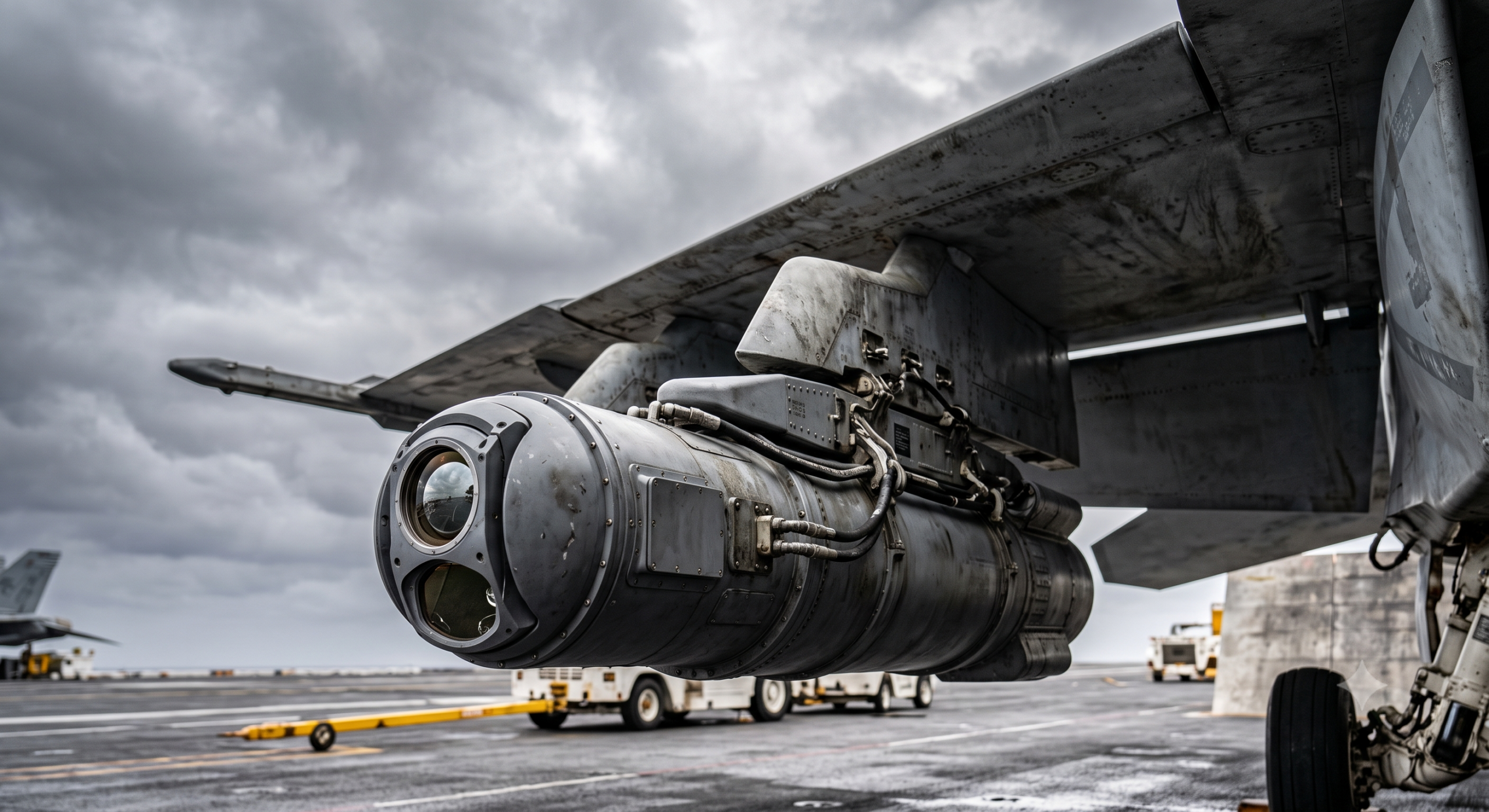
The footage was captured in 2015 by Navy F/A-18 pilots off the East Coast of the United States, using an ATFLIR (Advanced Targeting Forward-Looking Infrared) pod. Unlike the Tic Tac case, the Gimbal video comes from a single-sensor capture rather than a case with the same degree of independent radar corroboration — which matters for how AARO’s analysis and classification of it has proceeded, and is a real distinction worth understanding rather than glossing over.
In the footage, an oblong object holds a relatively fixed position in the sky while what appears to be rotation is visible around it, and audio of the pilots’ reactions — audible surprise and commentary about the object’s apparent lack of any visible means of propulsion — is part of what made the clip widely circulated after it first leaked publicly in 2017, years before the DoD’s official 2020 confirmation.
The Rotation Explanation Worth Understanding
This is the single most important technical point for understanding the Gimbal footage honestly, and it’s one that gets lost in a lot of secondary coverage: independent analysts, including some who worked on the original military sensor systems, have pointed out that the apparent “rotation” of the object is consistent with a known artifact of gimbal-mounted camera systems tracking a target while the aircraft itself banks and turns. As the ATFLIR pod’s gimbal mount compensates to keep the object centered in frame during the aircraft’s own roll, a rigid or non-rotating object can appear to spin relative to the frame purely as an optical effect of the tracking mechanism — not necessarily because the object itself is physically rotating.
This doesn’t mean the case is “solved” — AARO has not issued a resolved classification for it — but it is a real, technically grounded explanation for the video’s most visually striking feature, and leaving it out of an explanation of this footage would be a meaningful omission. What remains genuinely unexplained is the object’s apparent stationary hover against high-altitude winds and its lack of visible conventional propulsion, not the rotation effect specifically.
What the DoD Confirmed
As with the other two April 2020 releases, the Pentagon’s official confirmation covered two things: the footage is authentic Navy-captured video, and the object remains officially unidentified. No further official interpretation of what’s shown — including the rotation question above — has been issued as a confirmed DoD or AARO conclusion; the gimbal-artifact explanation comes from outside technical analysis, not an official resolution.
Current Status
Gimbal remains listed among AARO’s unresolved cases. As with the Tic Tac case, “unresolved” here means the available data — primarily a single sensor’s footage without the multi-platform radar corroboration that elevated the Tic Tac case — doesn’t meet the bar for a confident conventional or extraordinary conclusion, not that the object has been confirmed anomalous.
Primary Sources
The DoD’s April 2020 release and AARO’s public case-status reporting remain the primary official record. As covered in What AARO’s Case Classifications Actually Mean, understanding how “unresolved” is defined is essential context for reading any coverage of this case accurately.
Frequently Asked Questions
Does the gimbal-artifact explanation account for the whole video?
It specifically addresses the rotation effect, not the object’s overall flight characteristics or apparent lack of visible propulsion — those aspects of the footage remain part of why the case is still classified unresolved rather than resolved.
Was there radar data for the Gimbal incident like there was for the Tic Tac case?
The Gimbal case has less publicly documented multi-sensor radar corroboration than the Tic Tac encounter, which is a genuine evidentiary difference between the two cases worth keeping in mind when comparing how seriously each is treated in official analysis.
When did this video first become public?
It leaked in 2017 — alongside the GoFast footage, via To The Stars Academy — three years before the DoD’s official 2020 confirmation. See our GoFast video explainer for that separate release history.