
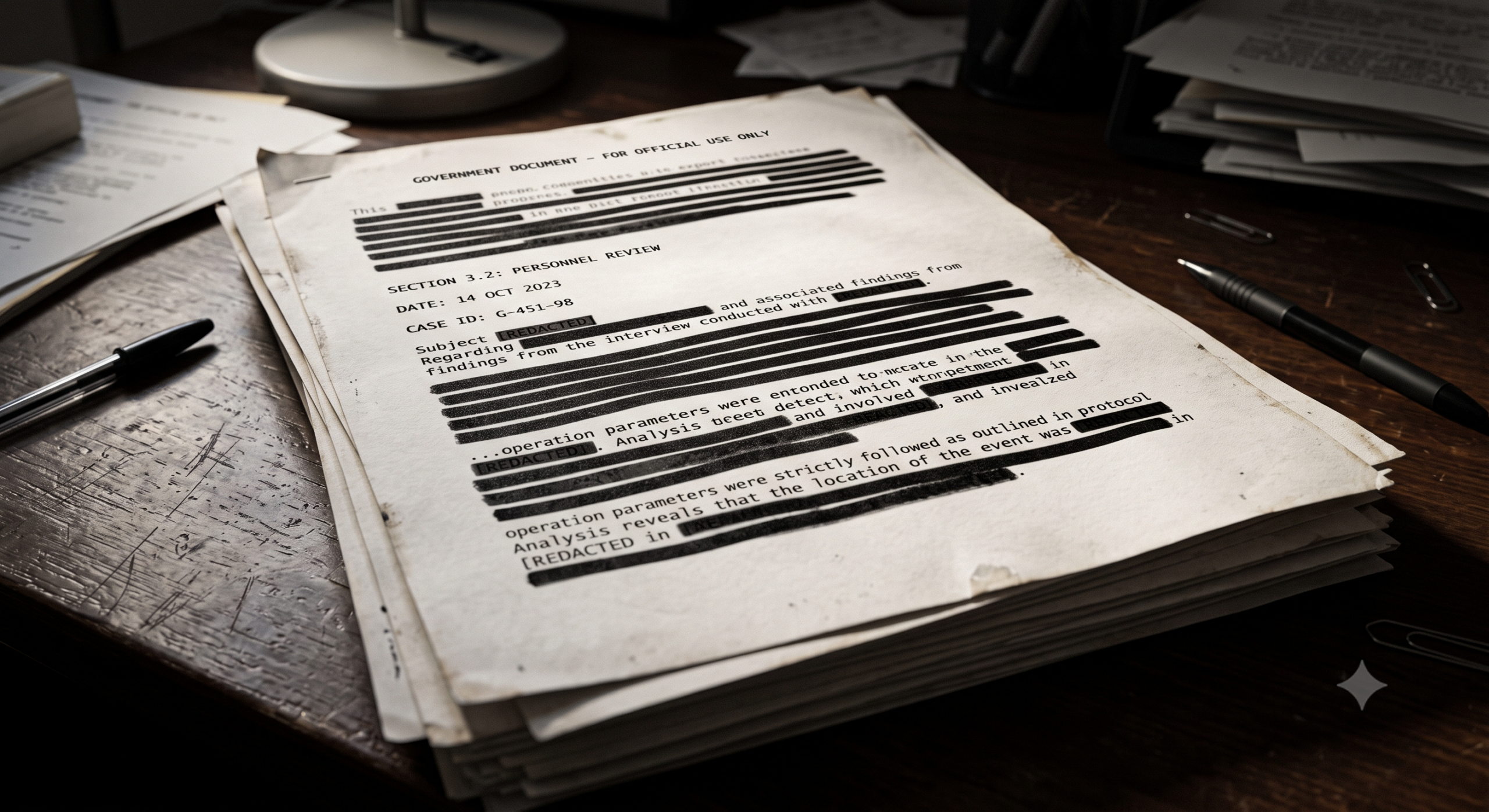
PURSUE is the program behind the steady stream of declassified UAP files that have made up most of the newer additions to the public record since the high-profile 2020 Navy video release — less famous than the Tic Tac or Gimbal footage individually, but arguably more significant for what it represents: an ongoing, institutionalized declassification pipeline rather than a series of one-off events.
What PURSUE Actually Is
PURSUE is a DoD-run declassification effort that reviews and releases UAP-related files that had previously been classified, working through backlogged records across multiple agencies and coordinating their transfer into the public record — including into the National Archives’ RG 615 collection (see our Reader’s Guide for how that collection is organized). As of 2026, the program has released more than 300 DoD UAP-related files, plus additional records sourced from NARA, AARO, NASA, and the FBI, making it the single largest contributor to the modern public UAP record in terms of raw document volume.
What’s Actually in the Released Files
The PURSUE releases aren’t limited to video footage — that’s a common misconception given how much attention the 2020 Navy videos received. The broader file set includes sensor data logs, internal case-assessment memos, radar records, and incident reports spanning multiple branches and time periods. Two specific categories worth knowing about: F-16 shootdown-related footage (from incidents where military aircraft engaged unidentified objects) and Sandia National Laboratories nuclear-facility sighting reports — the latter tying into a long-standing, separately documented pattern of reported UAP activity near nuclear weapons and energy facilities that predates PURSUE itself but has received renewed declassified documentation through it.
Why This Program Matters More Than Any Single Case
Individual viral videos like the Tic Tac footage get the headlines, but PURSUE represents something structurally different and, for serious researchers, more important: a standing institutional commitment to ongoing review and release, rather than disclosure driven by leaks, lawsuits, or individual media pressure campaigns. That’s a meaningful shift in how this information becomes public, and it’s part of why sites like this one — built around checking primary sources on a rolling basis — are a better fit for this topic now than a one-time news roundup would have been even five years ago.
How to Actually Follow New Releases
PURSUE releases don’t follow a fixed public announcement schedule the way the 2020 Navy video release did — files are added to the record on a rolling basis, primarily surfacing through RG 615 additions and periodic AARO public reporting rather than dedicated press events for each individual file. The most reliable way to track new releases is checking the National Archives Catalog directly (covered in our RG 615 guide) rather than waiting for news coverage of a specific file, since many additions don’t generate individual headlines despite being genuinely new public information.
A Reasonable Level of Skepticism
Volume of released files is not the same as resolution of individual cases — worth stating plainly. Most PURSUE-released records, like the individual case files covered elsewhere on this site, carry classifications like unresolved or insufficient data rather than confirmed conclusions (see our AARO classifications guide for what those actually mean). PURSUE has made meaningfully more raw material available for public research, which is a genuinely positive development for transparency — but it hasn’t, by itself, resolved the underlying questions in most individual cases.
Primary Sources
PURSUE-released files flow into the National Archives’ RG 615 collection and AARO’s public reporting — both covered in more depth elsewhere on this site — rather than having a separate, independent public archive of their own.
Frequently Asked Questions
Is PURSUE the same office as AARO?
No — PURSUE is specifically the declassification and release effort, while AARO is the DoD office responsible for investigation, case analysis, and classification. They work within the same broader UAP-transparency effort and their outputs overlap significantly, but they’re distinct functions.
Can members of the public request specific files through PURSUE?
PURSUE operates as a proactive declassification review process rather than a request-driven system — for records not yet reviewed and released through PURSUE, a standard FOIA request remains the applicable path, as covered in our RG 615 guide.
Does every PURSUE-released file get individually publicized?
No — most releases are added to the record without a dedicated press announcement, which is exactly why checking the National Archives Catalog directly is more reliable than waiting for news coverage if you want to stay current.